The Story
Bleu d'Auvergne AOP — the stronger of the two great Auvergne blues, and a cheese with more bite, more pungency and more personality than its gentler stablemate Fourme d'Ambert. Both come from the same volcanic uplands of the Massif Central, both hold AOP status, and both are made from cow's milk — but where Fourme d'Ambert is mild and creamy, Bleu d'Auvergne is assertive, tangy and unapologetically blue.
The cheese was created in the mid-19th century by Antoine Roussel, a farmer in the Auvergne who observed that moulds from rye bread could be used to blue his cheeses. He inoculated the curd with Penicillium roqueforti cultured from bread, pierced the wheels to allow air in, and produced a blue cheese that was robust enough to rival Roquefort — but made from cow's milk rather than sheep's. The method worked, and Bleu d'Auvergne has been made in the region ever since. It received AOP protection in 1975.
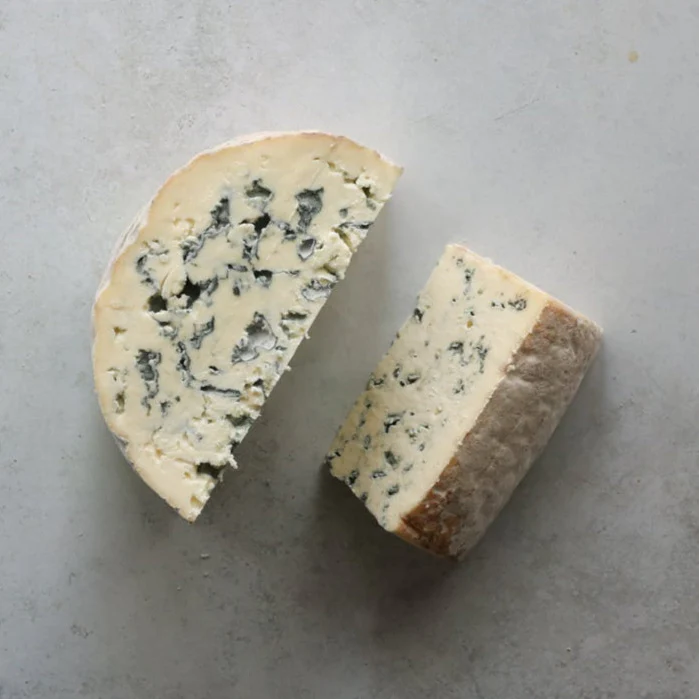
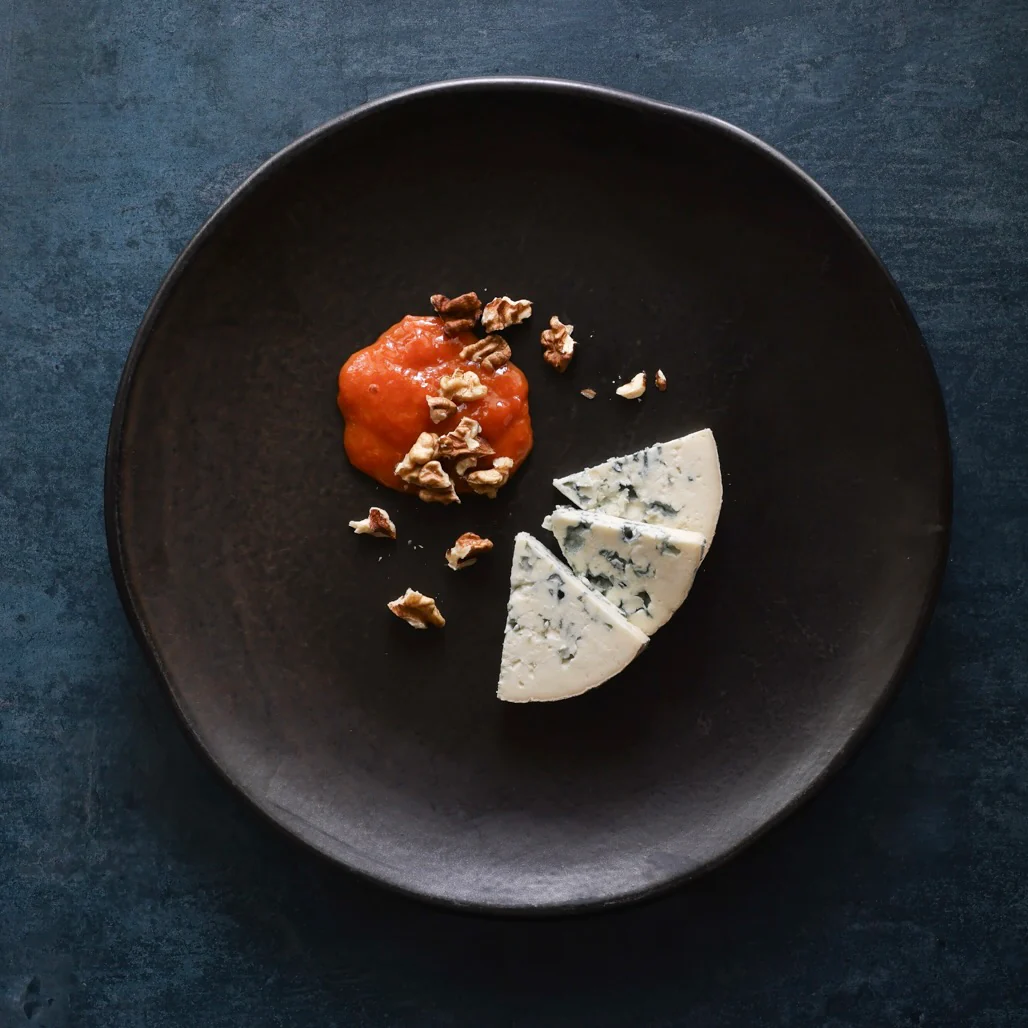
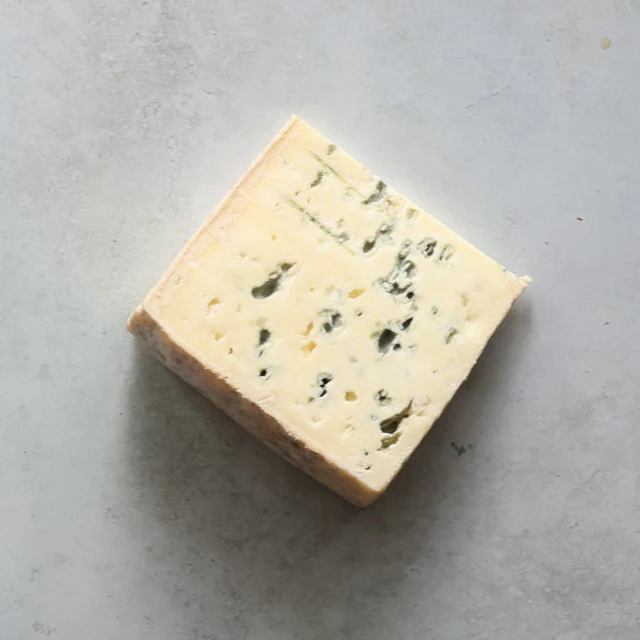
The paste is ivory to pale yellow, moist and slightly crumbly, with bold veins of blue-green mould running throughout. The flavour is strong: salty, tangy, with a sharp blue bite, notes of earth and mushroom, and a peppery, lingering finish. It is not as aggressive as Roquefort — there is more creaminess in the base paste — but it is not a beginner's blue. The rind is thin, damp and greyish. The texture softens as it approaches room temperature, becoming creamier and more spreadable.
Origin: Auvergne, Massif Central, France (AOP)
Ingredients: Cow's milk, salt, rennet, Penicillium roqueforti.
Storage: Wrap in wax paper or foil and refrigerate. Use within a week of cutting. Bring to room temperature before eating.
Allergens: Milk.
Details & Craftsmanship
Every detail has been carefully considered to bring you the perfect product.
Description
Bleu d'Auvergne AOP — the stronger of the two great Auvergne blues, and a cheese with more bite, more pungency and more personality than its gentler stablemate Fourme d'Ambert. Both come from the same volcanic uplands of the Massif Central, both hold AOP status, and both are made from cow's milk — but where Fourme d'Ambert is mild and creamy, Bleu d'Auvergne is assertive, tangy and unapologetically blue.
The cheese was created in the mid-19th century by Antoine Roussel, a farmer in the Auvergne who observed that moulds from rye bread could be used to blue his cheeses. He inoculated the curd with Penicillium roqueforti cultured from bread, pierced the wheels to allow air in, and produced a blue cheese that was robust enough to rival Roquefort — but made from cow's milk rather than sheep's. The method worked, and Bleu d'Auvergne has been made in the region ever since. It received AOP protection in 1975.
The paste is ivory to pale yellow, moist and slightly crumbly, with bold veins of blue-green mould running throughout. The flavour is strong: salty, tangy, with a sharp blue bite, notes of earth and mushroom, and a peppery, lingering finish. It is not as aggressive as Roquefort — there is more creaminess in the base paste — but it is not a beginner's blue. The rind is thin, damp and greyish. The texture softens as it approaches room temperature, becoming creamier and more spreadable.
Origin: Auvergne, Massif Central, France (AOP)
Ingredients: Cow's milk, salt, rennet, Penicillium roqueforti.
Storage: Wrap in wax paper or foil and refrigerate. Use within a week of cutting. Bring to room temperature before eating.
Allergens: Milk.