Original: $9.34
-70%$9.34
$2.80The Story
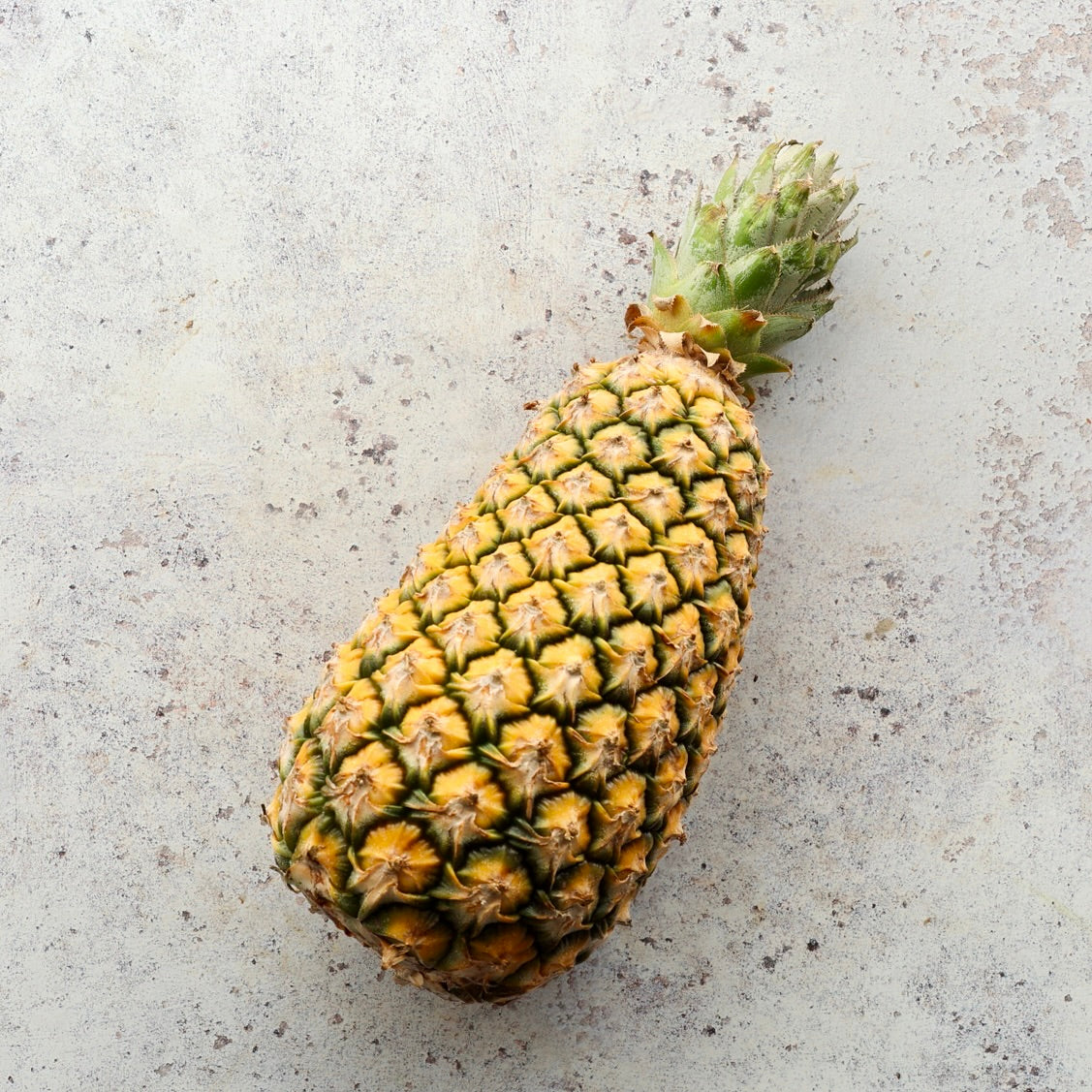
A white-fleshed pineapple from São Paulo state, sometimes sold under the name Sugarloaf. The flesh is pale ivory rather than the familiar golden-yellow, and the flavour is noticeably different — sweeter, lower in citric acid, with a honeyed quality and almost no bite at the back of the throat. People who find standard pineapple too sharp often take to these immediately.
The difference in acidity is not subtle. Most commercial pineapple varieties sit around 0.6–1.0% citric acid; the Sugarloaf type runs considerably lower, which is what allows the natural sugars to come through without that sour counterpoint. The fruit is left on the plant longer than export-grade golden varieties, which gives it time to convert starches into simple sugars more fully before harvest. That extended ripening also develops the aromatic compounds — there is a distinctly floral, almost vanilla-like note in a properly ripened white pineapple that golden varieties rarely carry.
The core is softer and sweeter than in a standard pineapple and is entirely edible. There is no need to cut it out — slice the fruit into rings and eat them whole. The flesh also contains bromelain, a proteolytic enzyme that breaks down protein. This is why pineapple can tenderise meat in a marinade, and why it prevents gelatine from setting if added raw. Cooking or briefly blanching deactivates the enzyme if you need the fruit for a jelly or set dessert.
Origin: Brazil, São Paulo state
Description
A white-fleshed pineapple from São Paulo state, sometimes sold under the name Sugarloaf. The flesh is pale ivory rather than the familiar golden-yellow, and the flavour is noticeably different — sweeter, lower in citric acid, with a honeyed quality and almost no bite at the back of the throat. People who find standard pineapple too sharp often take to these immediately.
The difference in acidity is not subtle. Most commercial pineapple varieties sit around 0.6–1.0% citric acid; the Sugarloaf type runs considerably lower, which is what allows the natural sugars to come through without that sour counterpoint. The fruit is left on the plant longer than export-grade golden varieties, which gives it time to convert starches into simple sugars more fully before harvest. That extended ripening also develops the aromatic compounds — there is a distinctly floral, almost vanilla-like note in a properly ripened white pineapple that golden varieties rarely carry.
The core is softer and sweeter than in a standard pineapple and is entirely edible. There is no need to cut it out — slice the fruit into rings and eat them whole. The flesh also contains bromelain, a proteolytic enzyme that breaks down protein. This is why pineapple can tenderise meat in a marinade, and why it prevents gelatine from setting if added raw. Cooking or briefly blanching deactivates the enzyme if you need the fruit for a jelly or set dessert.
Origin: Brazil, São Paulo state