The Story
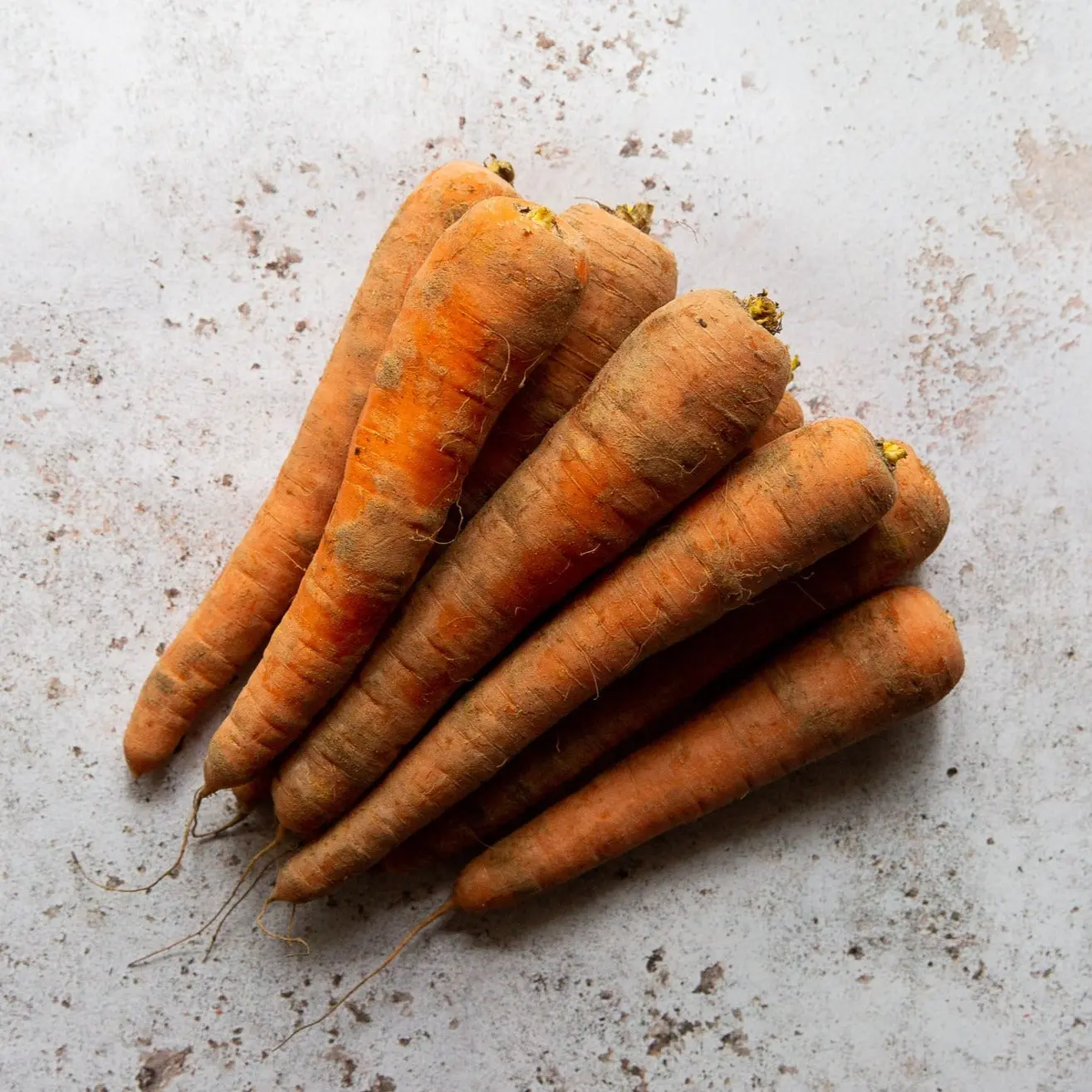
Carottes des sables (Daucus carota) from the Créances Basin in Normandy — sand carrots grown in the same Atlantic coastal dunes that produce the region's IGP leeks. The sandy soil of the Créances area is free-draining, stone-free and enriched with marine minerals carried in from the salt air and the seaweed that local growers have used as mulch for centuries. This is what makes a sand carrot different from an ordinary carrot: the roots grow through soft, yielding ground with no resistance, producing smooth, straight carrots with a fine texture and none of the woodiness that develops when roots have to push through compacted or stony soil.
The flavour is noticeably sweeter and more concentrated than standard carrots. The sandy growing medium forces the roots to develop more slowly and hold less water, which intensifies both the sugar content and the colour. These are carrots that work equally well raw — sliced thinly into salads or eaten as they are — and cooked, where the natural sweetness caramelises beautifully when roasted or braised. In French cooking, this is the carrot that ends up in a Vichy preparation, a velvety soup, or braised whole alongside a piece of poultry. Simple methods work best because there is enough flavour in the carrot itself.
Origin: Créances Basin, Normandy, France
Ingredients: Sand carrots (Daucus carota)
Storage: Refrigerate in a paper bag or the crisper drawer. Remove any leafy tops first if present. Sand carrots keep well for a week or more.
Description
Carottes des sables (Daucus carota) from the Créances Basin in Normandy — sand carrots grown in the same Atlantic coastal dunes that produce the region's IGP leeks. The sandy soil of the Créances area is free-draining, stone-free and enriched with marine minerals carried in from the salt air and the seaweed that local growers have used as mulch for centuries. This is what makes a sand carrot different from an ordinary carrot: the roots grow through soft, yielding ground with no resistance, producing smooth, straight carrots with a fine texture and none of the woodiness that develops when roots have to push through compacted or stony soil.
The flavour is noticeably sweeter and more concentrated than standard carrots. The sandy growing medium forces the roots to develop more slowly and hold less water, which intensifies both the sugar content and the colour. These are carrots that work equally well raw — sliced thinly into salads or eaten as they are — and cooked, where the natural sweetness caramelises beautifully when roasted or braised. In French cooking, this is the carrot that ends up in a Vichy preparation, a velvety soup, or braised whole alongside a piece of poultry. Simple methods work best because there is enough flavour in the carrot itself.
Origin: Créances Basin, Normandy, France
Ingredients: Sand carrots (Daucus carota)
Storage: Refrigerate in a paper bag or the crisper drawer. Remove any leafy tops first if present. Sand carrots keep well for a week or more.